
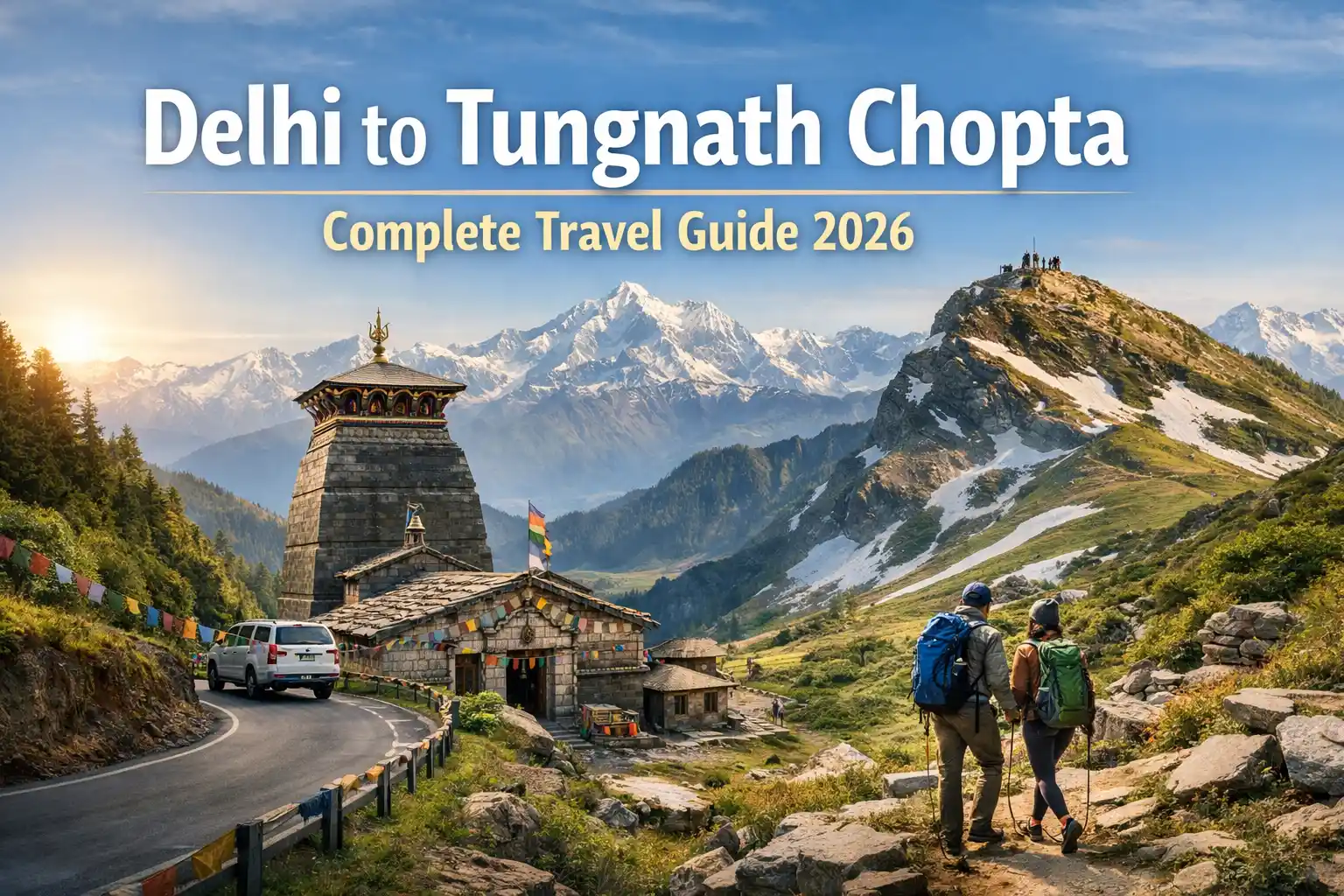
Delhi to Tungnath Chopta: Complete Travel Guide 2026 (Routes, Distance, Trek & Itinerary)
1. Introduction: Why Delhi to Tungnath Chopta is Trending in 2026
If you’re tired of Delhi’s traffic, pollution, and constant hustle, imagine this — within just a few hours, you can swap chaos for calm, horns for silence, and concrete for snow-covered Himalayan peaks. That’s exactly why the Delhi to Tungnath Chopta route has become one of the most searched and trending travel routes in 2026.
Over the past few years, more travelers have started looking beyond crowded hill stations like Manali and Mussoorie. Instead, they’re discovering hidden gems like Chopta — a peaceful, scenic destination that offers the perfect mix of nature, spirituality, and adventure. The journey from Delhi to Chopta isn’t just a trip; it’s an experience that combines a scenic road trip with a rewarding Himalayan trek.
One of the biggest reasons behind the rising popularity of this route is its accessibility. Unlike many high-altitude treks, the Chopta Tungnath trek from Delhi is beginner-friendly and doesn’t require extreme fitness or technical skills. Whether you’re a solo traveler, a couple, or a group of friends planning a weekend escape, this destination fits perfectly into a short itinerary.
Another factor driving interest in 2026 is the growing demand for “short Himalayan trips.” Travelers want maximum experience in minimal time — and this route delivers exactly that. Within 2–3 days, you can enjoy forests, rivers, mountains, and even visit the highest Shiva temple in the world.
For those planning their stay, locations near the trek base are becoming increasingly popular. Properties like Shivaay Premium Chopta are emerging as ideal choices for travelers who want comfort along with proximity to the Tungnath trek.
In short, the Delhi to Tungnath Chopta route is trending because it offers everything modern travelers are looking for — quick access, natural beauty, spiritual connection, and a memorable trekking experience.
2. About Chopta & Tungnath: Why This Destination is Special
Chopta is often called the “Mini Switzerland of India”, and once you visit, you’ll understand exactly why. Surrounded by lush green meadows, dense forests, and snow-covered Himalayan peaks, Chopta offers a raw and untouched beauty that is hard to find in more commercial hill stations.
Located in the state of Uttarakhand, Chopta serves as the base for one of the most iconic treks in India — the Tungnath trek. What makes this region truly unique is its perfect blend of adventure and spirituality. Unlike many trekking destinations that focus purely on nature, Chopta and Tungnath offer a deeply spiritual experience as well.
Tungnath Temple holds immense religious significance. It is the highest Shiva temple in the world, situated at an altitude of approximately 3,680 meters (12,073 feet). It is also one of the Panch Kedar temples, making it an important pilgrimage site for devotees of Lord Shiva. The temple’s ancient architecture, combined with the backdrop of majestic Himalayan peaks, creates a surreal and peaceful atmosphere.
The journey to Tungnath is as beautiful as the destination itself. The trek passes through rhododendron forests, alpine meadows, and scenic viewpoints. Depending on the season, you might walk through vibrant greenery, blooming flowers, or thick snow — each offering a completely different experience.
For adventure lovers, the trek doesn’t end at Tungnath. A further 1.5 km climb takes you to Chandrashila Peak, which offers one of the most breathtaking panoramic views in the Himalayas. From here, you can witness peaks like Nanda Devi, Trishul, and Chaukhamba.
What makes the Chopta Tungnath trek from Delhi especially appealing is how accessible it is. Unlike remote Himalayan treks that require long travel and acclimatization, this trek is relatively short and manageable, making it ideal even for beginners.
Delhi travelers love this destination because it provides a complete experience — scenic drives, peaceful stays, spiritual vibes, and an easy yet rewarding trek. It’s one of the rare places where you can disconnect from city life and reconnect with nature in just a weekend.
3. Delhi to Chopta Tungnath Distance & Travel Time
Before planning your trip, one of the most important things to understand is the Delhi to Chopta Tungnath distance and how long it takes to reach.
The total distance from Delhi to Chopta ranges between 400 to 450 kilometers, depending on the route you choose. While this might seem manageable on paper, the actual travel time varies significantly due to changing road conditions and terrain.
By road, the journey typically takes around 9 to 12 hours if you’re traveling continuously. However, most travelers prefer breaking the journey with short stops at scenic locations like Rishikesh or Devprayag. If you include these stops, the travel time can extend to 12–14 hours, making it a full-day journey.
For those choosing multi-mode transport (train + taxi or bus + taxi), the total travel time can range from 10 to 14 hours, depending on connections and waiting time.
Here’s a simple breakdown:
- Delhi to Rishikesh/Haridwar: 5–6 hours
- Rishikesh to Chopta: 5–7 hours
- Total: 10–12 hours
The journey starts with smooth highways from Delhi to Haridwar or Rishikesh. Once you enter the hills, the terrain becomes more winding and scenic. The roads pass through river valleys, forests, and mountain towns, making the journey visually rewarding.
It’s important to note that travel time can vary depending on:
- Traffic conditions (especially near Delhi and Haridwar)
- Weather (rain or snow can slow down travel)
- Road conditions in hilly areas
Despite the long travel time, the journey never feels tiring because of the constantly changing landscapes. From plains to hills, from rivers to forests — every hour of the drive brings something new.
Understanding the Delhi to Chopta Tungnath distance helps you plan your itinerary better and ensures a smooth and comfortable journey.
4. Best Routes from Delhi to Chopta Tungnath
Choosing the right Delhi to Chopta Tungnath route can significantly impact your overall travel experience. While all routes eventually lead you into the Garhwal Himalayas, each one offers a slightly different mix of scenery, road conditions, and travel convenience.
Let’s break down the three most popular routes:
Route 1: Delhi → Rishikesh → Rudraprayag → Ukhimath → Chopta (Best Route)
This is the most preferred and reliable route for travelers heading from Delhi to Chopta.
Distance: ~420 km
Time: 10–12 hours
Route Breakdown:
- Delhi → Meerut → Haridwar → Rishikesh
- Rishikesh → Devprayag → Srinagar → Rudraprayag
- Rudraprayag → Ukhimath → Chopta
Why this route is best:
- Well-maintained roads (especially till Rudraprayag)
- Plenty of food stops and fuel stations
- Scenic river views of Ganga and Alaknanda
- Clear signboards and easier navigation
Things to keep in mind:
- Traffic near Haridwar and Rishikesh can slow you down
- Mountain roads after Rudraprayag require careful driving
Ideal for: First-time travelers, families, and self-drive road trips
Route 2: Delhi → Haridwar → Srinagar → Ukhimath → Chopta (Scenic Route)
This route is similar to Route 1 but slightly more direct and scenic in certain stretches.
Distance: ~410–430 km
Time: 10–11 hours
Highlights:
- Less crowded than the Rishikesh route in some parts
- Beautiful Himalayan valley views
- Smooth connectivity till Srinagar
Pros:
- Slightly shorter in distance
- Fewer diversions
Cons:
- Limited food options compared to Route 1
- Navigation may require GPS assistance
Ideal for: Travelers looking for a quieter and scenic drive
Route 3: Delhi → Chamoli → Gopeshwar → Chopta (Less Crowded Route)
This is a less commonly used route but offers a more offbeat experience.
Distance: ~450 km
Time: 11–13 hours
Highlights:
- Less tourist traffic
- Peaceful surroundings
- Unique mountain views
Pros:
- Avoids crowded highways
- More raw and untouched landscapes
Cons:
- Road conditions can be inconsistent
- Fewer fuel stations and restaurants
- Not ideal for first-time drivers in the hills
Ideal for: Experienced travelers and adventure seekers
Which Route Should You Choose?
- Best Overall: Route 1 (balanced, safe, and scenic)
- Most Scenic: Route 2
- Least Crowded: Route 3
No matter which Delhi to Chopta Tungnath route you choose, the journey itself is filled with breathtaking landscapes — from river confluences to dense forests and mountain villages.
5. How to Reach Tungnath from Delhi (All 7 Ways Explained)
If you’re wondering how to reach Tungnath from Delhi, there are multiple travel options depending on your budget, time, and comfort preference. From flights to road trips, each option offers a unique experience.
1. By Flight (Fastest Option)
- From: Indira Gandhi International Airport (Delhi)
- To: Jolly Grant Airport (Dehradun)
Flight Time: ~1 hour
Then: Taxi from Dehradun to Chopta (6–7 hours)
Total Travel Time: ~7–9 hours
Pros:
- Fastest way to reach
- Saves travel fatigue
Cons:
- Expensive option
- Requires taxi booking afterward
Best for: Luxury travelers and those short on time
2. By Train
- Route: Delhi → Haridwar Railway Station
Train Time: 5–6 hours
Then: Taxi or bus to Chopta (6–7 hours)
Total Time: ~11–13 hours
Pros:
- Budget-friendly
- Comfortable journey
Cons:
- Requires additional road travel
Best for: Budget travelers
3. By Bus
- Route: Delhi → Rishikesh/Haridwar (overnight bus)
Time: 6–7 hours
Then: Shared taxi or bus to Chopta
Total Time: ~12–14 hours
Pros:
- Cheapest option
- Easily available
Cons:
- Less comfortable for long journeys
- Multiple transfers
Best for: Backpackers
4. By Car (Best Option Overall)
Driving from Delhi to Chopta is considered the best way to travel.
Time: 10–12 hours
Why it’s best:
- Complete flexibility
- Freedom to stop at scenic points
- Perfect for group travel
Best for: Families, couples, and road trip lovers
5. By Taxi
You can book a private taxi from Delhi to Chopta.
Cost: ₹6,000 – ₹12,000 (one way)
Time: 10–12 hours
Pros:
- Comfortable
- No driving stress
Cons:
- Costly compared to bus/train
6. Bike Trip (Adventure Option)
Many riders choose this route for an unforgettable biking experience.
Time: 2 days (recommended)
Pros:
- Ultimate adventure
- Scenic ride
Cons:
- Physically demanding
- Requires riding experience
7. Shared Taxi + Local Transport
- Delhi → Rishikesh (bus/train)
- Rishikesh → Ukhimath (shared taxi)
- Ukhimath → Chopta (local taxi)
Total Time: ~12–15 hours
Pros:
- Affordable
- Local travel experience
Cons:
- Time-consuming
- Less comfortable
Cheapest vs Fastest Comparison
- Cheapest: Bus + shared taxi
- Fastest: Flight + taxi
- Best Overall: Self-drive car
Understanding how to reach Tungnath from Delhi helps you choose the right option based on your travel style and budget.
6. Delhi to Chopta Road Trip Experience
A Delhi to Chopta road trip itinerary is not just about reaching a destination — it’s about enjoying every moment of the journey. This route offers one of the most scenic drives in North India, making it a favorite among road trip enthusiasts.
Phase 1: Delhi → Haridwar → Rishikesh (Plains to Hills Transition)
The journey begins with smooth highways as you leave Delhi early in the morning. The roads are wide and comfortable until Haridwar, making the first part of the drive easy.
Once you reach Rishikesh, you’ll feel a noticeable shift in the environment:
- Cooler air
- Fewer crowds
- Start of mountain terrain
Phase 2: Rishikesh → Devprayag → Rudraprayag (River Views)
This is where the real beauty begins.
You’ll drive alongside the Ganga River, witnessing breathtaking views at every turn. One of the must-stop locations is Devprayag, where the Alaknanda and Bhagirathi rivers merge to form the Ganga.
Further ahead, you’ll reach Rudraprayag, another sacred confluence point. These stops make your Delhi to Chopta by car journey more memorable.
Phase 3: Rudraprayag → Ukhimath → Chopta (Mountain Drive)
This stretch is the most scenic and peaceful part of the journey.
- Narrow mountain roads
- Dense forests
- Occasional snowfall in winter
- Minimal traffic
As you approach Chopta, the temperature drops, and the landscape becomes more alpine. You’ll start seeing open meadows and snow patches during colder months.
Best Scenic Stops
- Rishikesh (breakfast stop)
- Devprayag (river confluence)
- Srinagar (fuel + food)
- Rudraprayag (rest stop)
Driving Tips for a Safe Trip
- Start early (4–5 AM) to avoid traffic
- Avoid night driving in hills
- Keep fuel tank full after Srinagar
- Carry snacks and water
- Drive slowly on sharp turns
Why This Road Trip is Special
The Delhi to Chopta road trip itinerary offers a rare combination of:
- Smooth highways
- River-side driving
- Mountain landscapes
- Spiritual stops
It’s not just a journey — it’s a gradual transformation from urban chaos to Himalayan peace.
7. Chopta to Tungnath Trek Complete Guide
The highlight of your entire journey is undoubtedly the Chopta Tungnath Chandrashila trek from Delhi. This trek is one of the most beginner-friendly Himalayan treks, yet it delivers views and experiences that rival some of the most difficult high-altitude expeditions.
Trek Overview
- Starting Point: Chopta
- End Point: Tungnath Temple
- Distance: 3.5 km (one way)
- Time Required: 2–4 hours
- Difficulty Level: Easy to Moderate
The trail is well-defined and paved for most parts, making it suitable even for first-time trekkers. Unlike rugged trekking routes, this path allows you to focus more on enjoying the surroundings rather than worrying about navigation.
Trail Experience
The trek begins from Chopta and gradually ascends through dense forests and open meadows. As you move forward, the scenery keeps changing:
- Thick rhododendron forests (especially vibrant in spring)
- Expansive alpine meadows
- Snow-covered trails in winter
- Clear views of Himalayan peaks
Every turn on the trail feels like a postcard view. The higher you go, the more dramatic the landscape becomes.
Reaching Tungnath Temple
After a steady climb, you’ll reach Tungnath Temple — a peaceful and spiritual spot surrounded by towering mountains. The calmness here is unmatched, and many travelers take time to sit, relax, and absorb the energy of the place.
Extension: Tungnath to Chandrashila Peak
For those who want more adventure, the trek continues:
- Distance: 1.5 km (from Tungnath)
- Time: 45 minutes to 1 hour
This final stretch is slightly steeper but extremely rewarding. Once you reach Chandrashila Peak, you’ll witness 360-degree panoramic views of the Himalayas.
Famous peaks visible include:
- Nanda Devi
- Trishul
- Chaukhamba
Sunrise from Chandrashila is considered one of the best in India.
Seasonal Trek Experience
- Summer (March–June): Green meadows and clear skies
- Autumn (Sept–Nov): Crisp weather, best visibility
- Winter (Dec–Feb): Snow trek experience
- Monsoon (July–Aug): Risky due to slippery paths
Trek Essentials
- Good trekking shoes
- Warm clothes (even in summer)
- Water and snacks
- Sunglasses and sunscreen
- Walking stick (optional but helpful)
Important Tips
- Start early (especially for sunrise at Chandrashila)
- Maintain a steady pace — no need to rush
- Stay hydrated
- Respect the environment (no littering)
The Chopta Tungnath Chandrashila trek from Delhi is perfect for those who want a complete Himalayan experience without extreme difficulty. It’s short, scenic, spiritual, and unforgettable.
8. Delhi to Tungnath Trek Plan (Step-by-Step)
Planning your trip properly ensures you get the most out of your journey. Here’s a simple and effective Delhi to Tungnath trek plan that works perfectly for most travelers.
Day 1: Delhi → Chopta (Travel Day)
- Start early from Delhi (around 4–5 AM)
- Reach Rishikesh by breakfast time
- Continue via Rudraprayag and Ukhimath
- Reach Chopta by evening
Total Travel Time: 10–12 hours
Evening Plan:
- Check-in at your stay (preferably near trek base)
- Rest and acclimatize
- Early dinner and sleep
Tip: Staying near the trek start point (like Shivaay Premium Chopta) helps you begin the trek easily the next morning.
Day 2: Trek to Tungnath + Chandrashila
- Wake up early (around 4–5 AM)
- Start trek before sunrise
Trek Plan:
- Reach Tungnath in 2–3 hours
- Continue to Chandrashila for sunrise views
- Spend time at the top
Return:
- Trek back to Chopta by afternoon
- Rest and enjoy the surroundings
Optional:
- Explore nearby meadows
- Bonfire or relaxed evening
Day 3: Chopta → Delhi (Return Journey)
- Start early morning
- Follow the same route back
- Reach Delhi by evening/night
Why This Plan Works
- Balanced travel + trekking
- Enough rest time
- Covers all major highlights
- Ideal for weekend trips
Quick Alternative Plan (2 Days)
- Day 1: Travel overnight to Chopta
- Day 2: Trek + return
Not recommended for beginners due to fatigue
Relaxed Plan (4 Days)
- Day 1: Delhi → Rishikesh stay
- Day 2: Rishikesh → Chopta
- Day 3: Trek
- Day 4: Return
Ideal for families and slow travelers
This Delhi to Tungnath trek plan ensures you experience both the journey and the destination without feeling rushed.
9. Delhi to Chopta Itinerary (2 Days / 3 Days / 4 Days)
Your travel experience depends heavily on how you plan your time. Here are three well-structured options for a Delhi to Chopta itinerary 2 days / 3 days / 4 days, depending on your schedule.
Option 1: 2 Days Itinerary (Fast-Paced Trip)
Day 1:
- Overnight travel from Delhi
- Reach Chopta early morning
Day 2:
- Trek Tungnath + Chandrashila
- Return to Delhi same day/night
Best For:
- Experienced travelers
- Time constraints
Drawback:
- Very tiring
Option 2: 3 Days Itinerary (Most Popular)
Day 1:
- Delhi → Chopta
Day 2:
- Tungnath + Chandrashila trek
Day 3:
- Return to Delhi
Best For:
- Weekend travelers
- Balanced experience
Option 3: 4 Days Itinerary (Relaxed Trip)
Day 1:
- Delhi → Rishikesh stay
Day 2:
- Rishikesh → Chopta
Day 3:
- Trek day
Day 4:
- Return
Best For:
- Families
- Couples
- Leisure travelers
Which Itinerary Should You Choose?
- Short on time: 2 Days
- Best balance: 3 Days
- Comfortable trip: 4 Days
No matter which plan you choose, the Delhi to Chopta itinerary 2 days / 3 days remains one of the most rewarding short trips from Delhi in 2026.
10. Budget Breakdown: Delhi to Chopta Tungnath Trip Cost
Planning your expenses in advance is essential for a smooth journey. A Delhi to Chopta Tungnath budget trip can be very affordable or moderately luxurious depending on your travel style, accommodation choice, and transport mode.
Budget Trip (₹2,000 – ₹4,000 per person)
This option is ideal for backpackers and students.
Cost Breakdown:
- Bus (Delhi to Rishikesh): ₹500–₹800
- Shared taxi (Rishikesh to Chopta): ₹800–₹1,500
- Budget stay/hostel: ₹500–₹1,000 per night
- Food: ₹300–₹500 per day
Total Estimated Cost: ₹2,000–₹4,000
Pros:
- Very affordable
- Suitable for solo travelers
Cons:
- Less comfort
- Longer travel time
Mid-Range Trip (₹5,000 – ₹10,000 per person)
This is the most popular category for travelers.
Cost Breakdown:
- Train or semi-sleeper bus: ₹800–₹1,500
- Private/shared taxi: ₹2,000–₹3,000
- Hotel stay: ₹1,500–₹3,000 per night
- Food: ₹500–₹800 per day
Total Estimated Cost: ₹5,000–₹10,000
Pros:
- Comfortable journey
- Better accommodation
- Balanced experience
Luxury Trip (₹10,000 – ₹18,000+ per person)
For travelers looking for comfort and premium experiences.
Cost Breakdown:
- Private car/taxi from Delhi: ₹6,000–₹12,000 (split among group)
- Premium stay (Shivaay Premium Chopta): ₹3,000–₹6,000 per night
- Food and extras: ₹800–₹1,500 per day
Total Estimated Cost: ₹10,000+
Pros:
- Comfortable travel
- Scenic stays with mountain views
- Better overall experience
Key Expense Factors
- Transport mode (bus vs car)
- Stay type (budget vs premium)
- Season (winter prices may increase)
- Group size (shared costs reduce expenses)
A well-planned Delhi to Chopta Tungnath budget trip ensures you enjoy the Himalayas without overspending.
11. Best Time to Visit Chopta Tungnath
Choosing the right time is crucial for making the most of your trip.
Summer (March to June) – Best Time
- Pleasant weather (10°C to 25°C)
- Clear skies and mountain views
- Ideal for trekking
This is considered the best season for first-time travelers.
Autumn (September to November)
- Crisp air and excellent visibility
- Fewer crowds
- Perfect for photography
Winter (December to February)
- Heavy snowfall
- Snow trekking experience
- Temperature can drop below zero
Best for snow lovers, but requires preparation.
Monsoon (July to August) – Avoid
- Landslides and slippery roads
- Limited visibility
- Travel disruptions
Conclusion on Timing
- Best overall: March to June
- Best for snow: December to February
- Best for peace: September to November
12. Where to Stay in Chopta
Accommodation plays a major role in your overall experience, especially in a remote destination like Chopta. Choosing the right place ensures comfort after a long journey and an early start for your trek.
One of the most preferred options is Shivaay Premium Chopta, especially for travelers looking for a balance of comfort and location.
Why Location Matters
Staying near the trek base is important because:
- You can start the trek early
- Avoid unnecessary travel time
- Experience peaceful surroundings
What to Expect in Chopta Stays
Most accommodations in Chopta are:
- Camps or cottages
- Basic hotels
- Limited luxury options
Why Choose Shivaay Premium Chopta
- Close proximity to Tungnath trek starting point
- Scenic mountain views
- Comfortable rooms and facilities
- Suitable for couples, families, and groups
After a long road trip from Delhi, having a comfortable stay makes a big difference. A place like Shivaay Premium Chopta enhances your overall travel experience by offering both convenience and relaxation.
Stay Tips
- Book in advance during peak season
- Carry essentials (limited shops nearby)
- Check weather conditions before arrival
13. Travel Tips for Delhi to Chopta Trip
A well-prepared traveler always has a better experience. Here are some essential tips for your trip.
Packing Essentials
- Warm clothes (even in summer)
- Trekking shoes
- Power bank
- Basic medicines
- Snacks and water
Safety Tips
- Avoid night driving in hills
- Check weather before travel
- Drive carefully on mountain roads
- Stay hydrated during trek
Trek Tips
- Start early in the morning
- Maintain a steady pace
- Take breaks when needed
- Do not litter
Travel Planning Tips
- Start early from Delhi
- Keep buffer time for delays
- Book stay in advance
- Carry cash (limited ATM access)
Connectivity
- Mobile networks may be weak
- Inform family before reaching remote areas
Following these tips ensures a smooth and enjoyable journey from Delhi to Chopta.
FAQs
1. What is the Delhi to Chopta Tungnath distance?
The distance from Delhi to Chopta Tungnath is approximately 400–450 km. It usually takes 10–12 hours by road depending on traffic and weather conditions.
2. How to reach Tungnath from Delhi easily?
The easiest way is by car via Rishikesh and Rudraprayag. You can also take a train to Haridwar and then continue by taxi.
3. Is the Chopta Tungnath trek from Delhi suitable for beginners?
Yes, the trek is easy to moderate and suitable for beginners with basic fitness.
4. What is the best time to visit Chopta Tungnath?
March to June is the best time. Winter is ideal for snow lovers.
5. How long is the Tungnath trek?
The trek is around 3.5 km one way from Chopta.
6. Can I do a Delhi to Chopta itinerary in 2 days?
Yes, but it will be fast-paced and tiring. A 3-day plan is better.
7. Is snow available in Chopta?
Yes, snow is usually available from December to February.
8. What is the cost of a Delhi to Chopta Tungnath budget trip?
It can range from ₹2,000 to ₹10,000 depending on travel style.
9. Is it safe to travel from Delhi to Chopta?
Yes, it is safe if you follow basic travel precautions and avoid night driving in hills.
10. Where should I stay in Chopta?
You can choose camps or hotels. Shivaay Premium Chopta is a good option for comfort and location.